A connected core campus
The outdoor Hot Spot, HQ and apparatus support, Western town interiors, an EMS/MCI apron, and working farm and animal areas. Meals and flexible teaching space sit below the Mess Hall’s second-floor bunks.
 ← Explore Freedom Farms
Freedom Farms · Tooele County, Utah
Working Land. Useful Animals. Real Responsibility.
A community-built campus for first responders, law enforcement, veterans, their families and rural neighbors. Training, recovery and peer connection, agriculture, skilled trades, music and animal-disaster readiness—together in one useful place.
Campus in development · Concept updated October 10, 2026
The place we are developing
The outdoor Hot Spot, HQ and apparatus support, Western town interiors, an EMS/MCI apron, and working farm and animal areas. Meals and flexible teaching space sit below the Mess Hall’s second-floor bunks.
Freedom Farms provides the setting and logistics. Qualified providers retain their programs, instructors, standards and professional authority. The aim is longer training stays and better coordination across agencies.
A burn/rescue tower, dry SCBA confidence area, watch tower and air/ground coordination reserve. Future dive/water-rescue facilities and an engineered swift-water channel have their own areas and development requirements.
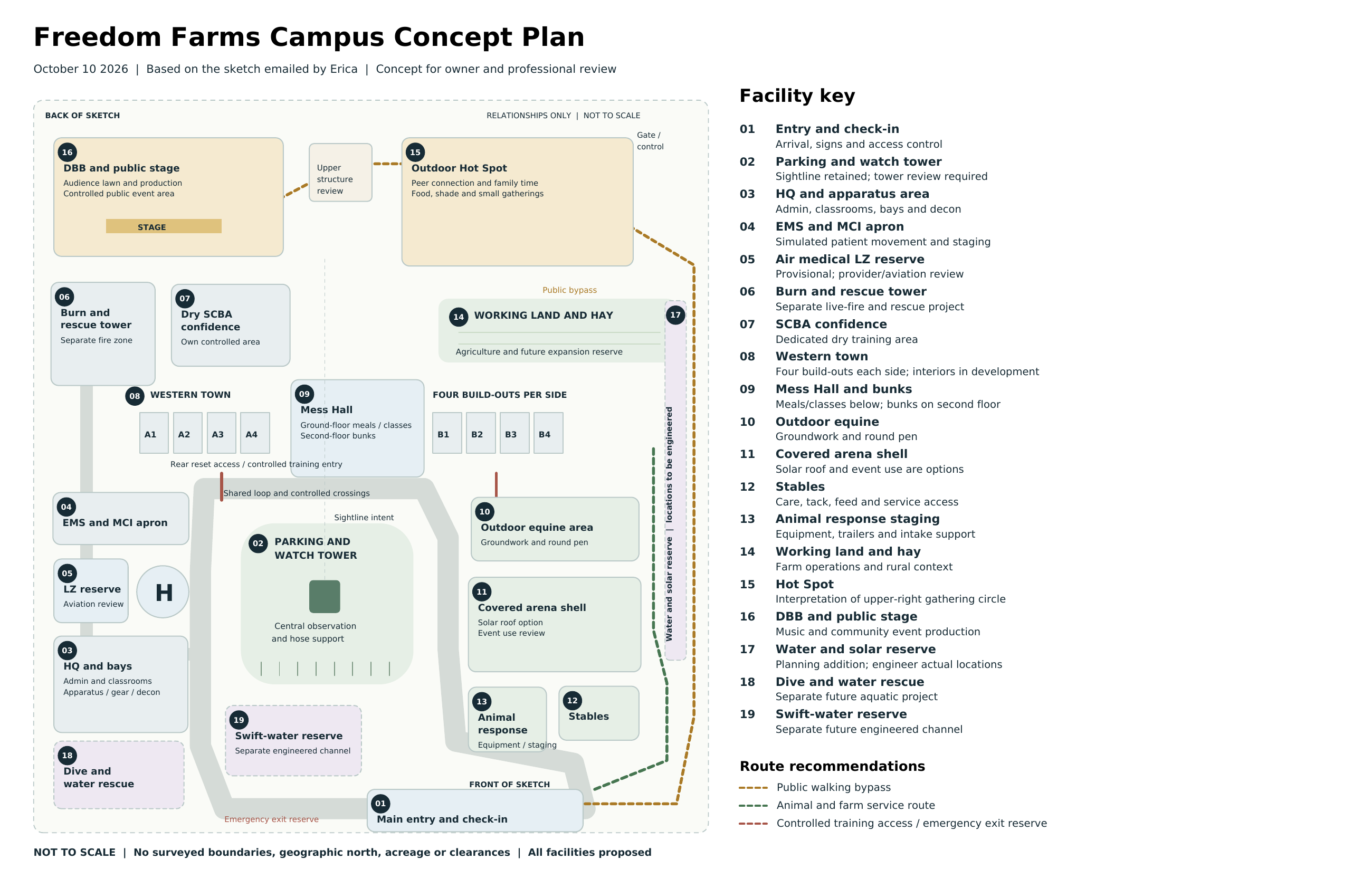
The drawing connects the places, programs and daily movement. Site dimensions and operating capacities will be established through professional review.
This is the current concept for review. Facility approvals, program roles and opening dates are established as each funded phase progresses.
A useful first conversation
Tell us which part fits your work and what you could bring. Useful help starts with a clear scope, a person who can carry it forward and one next step.
Agency and education providers
Review facility needs, shape a course or exercise, identify a qualified program person, or offer a nonbinding support letter.
Start this conversationProfessionals, contractors and trades
Bring a defined professional review, a scoped estimate, construction skills, materials or a coordinated installation package.
Start this conversationFounding sponsors and suppliers
Help with a specific campus component: kitchen, bunks, training props, communications, water systems, solar or operating equipment.
Start this conversationFarm, equine and veterinary experience
Shape animal welfare, farm operations, stables, arena use, feed and water, evacuation training or animal-response logistics.
Start this conversationPeer support and community programs
Help organize the Hot Spot, crew meals, family time and useful work, with qualified professionals shaping any clinical services.
Start this conversationCreative, event and media teams
Help document the journey or develop a defined production, music, mission-card or signage contribution.
Start this conversationThe path to opening
Groundbreaking, the first operating programs, the grand reveal and Dust Bowl Ball are separate milestones. Dates follow the work and resources needed for each.
Use the concept drawing, advisor requirements, estimates and defined contributions to choose the first funded scope.
Prepare approved access, utilities and the first usable areas, including the outdoor Hot Spot and working-land support.
Develop HQ, the town, EMS apron, Mess Hall and upstairs bunks, plus initial equine and animal-response areas.
Bring fire, SCBA, observation, aviation and separate aquatic projects forward as their requirements and resources are ready.
Use a small approved course, controlled exercise, gathering and training stay to test the operating model.
Introduce completed areas at the grand reveal, then grow recurring training and community use. Dust Bowl Ball has its own event plan.
Start with a conversation
A skill, an introduction, equipment, time, a scoped contribution or a good question. We would like to hear it.
Email Freedom Farms ffesmission@gmail.comLand arrangements and federal tax-exemption work remain underway. Dust Bowl Ball dates follow venue permission and a ready production budget.